Building the Balloon Simulation System, and Assembling the Rubin Model
Assembling the Rubin Model balloon simulation system
The Rubin Model balloon systems can be pre-assembled and then frozen for future use.
Assembling the simulated fetal heart
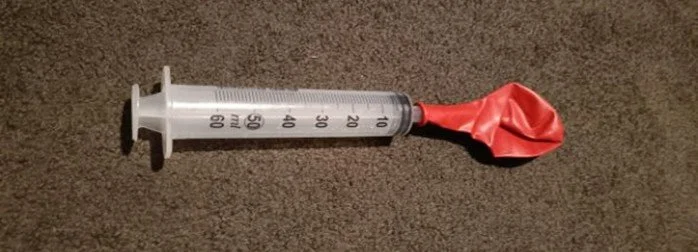
To create the fetal heart, place a small round metal object, like a 1oz fishing sinker, into a 30cm high-grade latex balloon.
Draw up 30mL of red-colored water into a catheter tipped syringe, and inject the fluid into the balloon, and tie off.
Tips and Tricks:
Make sure to carefully expel air before tying off the balloon, as trapped air will create artifact on ultrasound image.
Tie the balloon so that the balloon is tense and not flaccid for easier puncture.
Cover the balloon completely in clear high grade adhesive sealant, such as what would be found in hardware stores for waterproofing bathrooms and windows.
Tips and Tricks:
Use nitrile or latex gloves, squeeze a nickel-sized amount of sealant into palm (approximately 1cm), and evenly spread sealant over balloon.
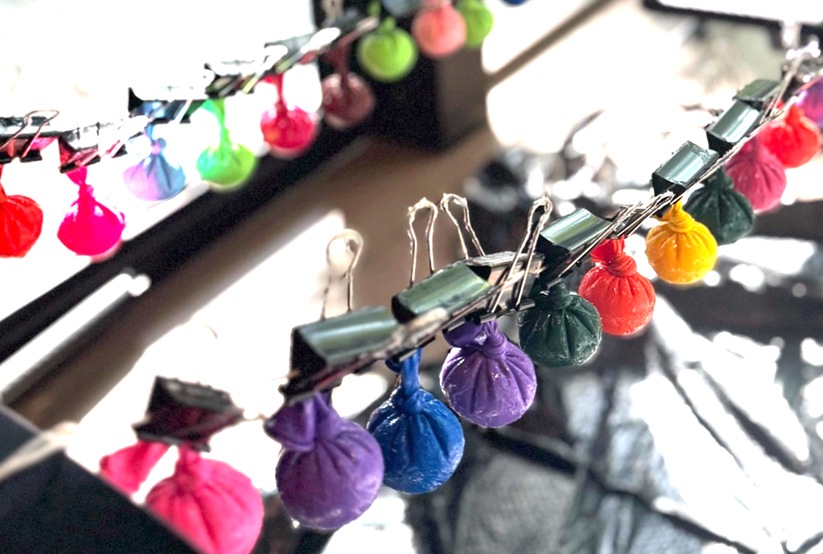
Hang the balloon to dry (for example clip it to a clothesline as in the photo). The sealant needs a minimum of 6 hours to cure, and should no longer be tacky to the touch.
Tips and Tricks:
After sealant is applied and cured, consider applying a second coat of sealant to reduce leakage with repeated puncture.
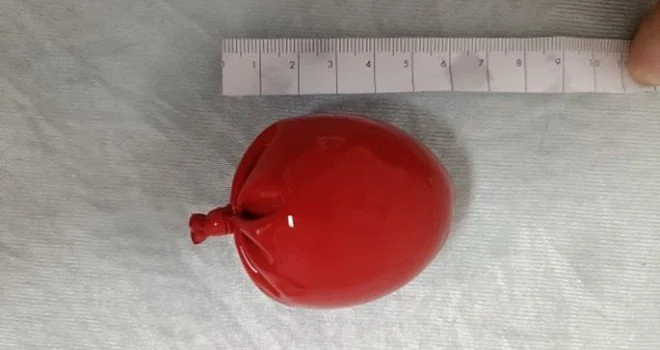
Once cured, cut away the loose neck of the balloon above the knot.
Assembling the simulated fetus
To make the fetus balloon, mix up a gelatin mixture (standard Jell-O/Jelly crystals), at double concentration.
Stretch open the neck of a 2nd high-grade 30cm balloon and drop the fetal heart balloon inside. Use the catheter tipped syringe to fill balloon with 60mL of the gelatin mixture. Refrigerate the balloon on its side for approximately 4 hours, or until the gelatin mixture is set, and then coat with adhesive sealant as above. Once cured, cut away the loose neck of the balloon above the knot.
Tips and Tricks:
Expel air before tying off the balloon, as trapped air will create artifact on ultrasound.
Tie the balloon so that the it is tense and not flaccid, for easier puncture.
After sealant is applied and cured, consider applying a second coat of sealant to reduce leakage with repeated puncture.
Assembling the simulated amniotic sac
To make the amniotic sac, open a high-grade 45cm balloon at the neck as wide as possible, and drop the fetus balloon inside the larger balloon.
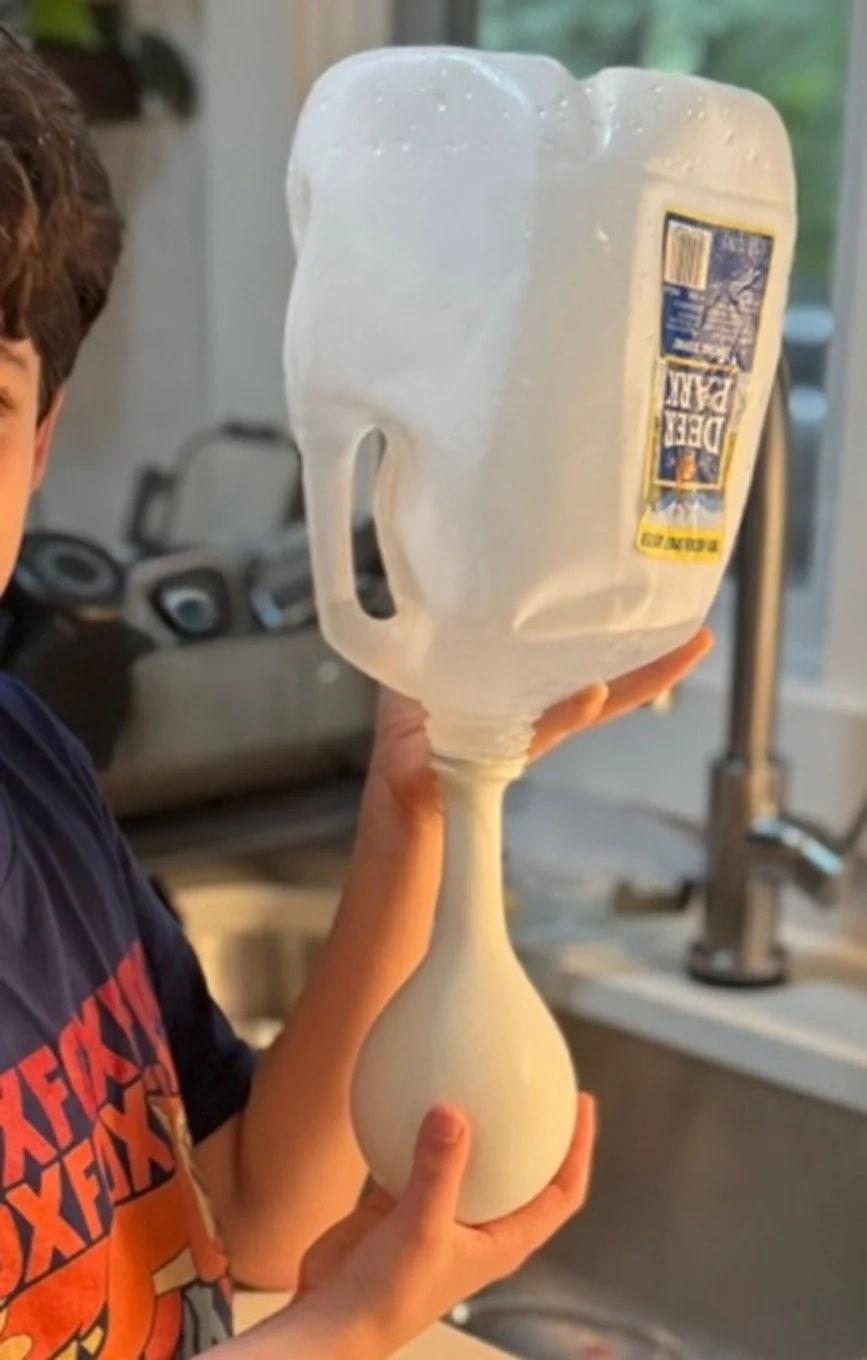
Measure 550ml water into a large drink container (for example a one gallon water jug), secure the lip of the balloon around top of container, invert, and squeeze to use air to force all of the water into the balloon, then tie off the balloon.
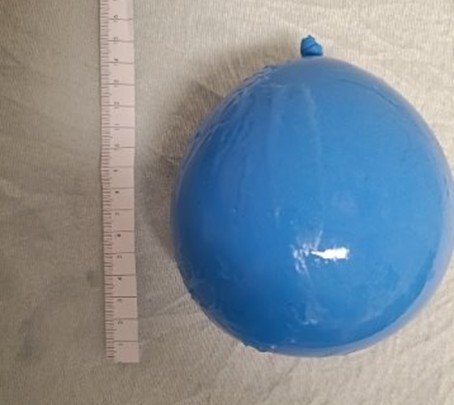
As with the fetal heart and fetus balloons, cover the balloon in sealant, hang, and allow to dry, then cut off the loose balloon neck.
Tips and Tricks:
Expel air before tying off the balloon, as trapped air will create artifact on ultrasound.
Tie the balloon so that the it is tense, and not flaccid, for easier puncture.
Use nitrile or latex gloves, squeeze approximately 3cm of adhesive sealant into palm, and evenly coat the larger balloon in sealant.
After first coat of sealant is cured, apply a second coat of sealant to reduce leakage with repeated puncture.
Assembling the Rubin Model
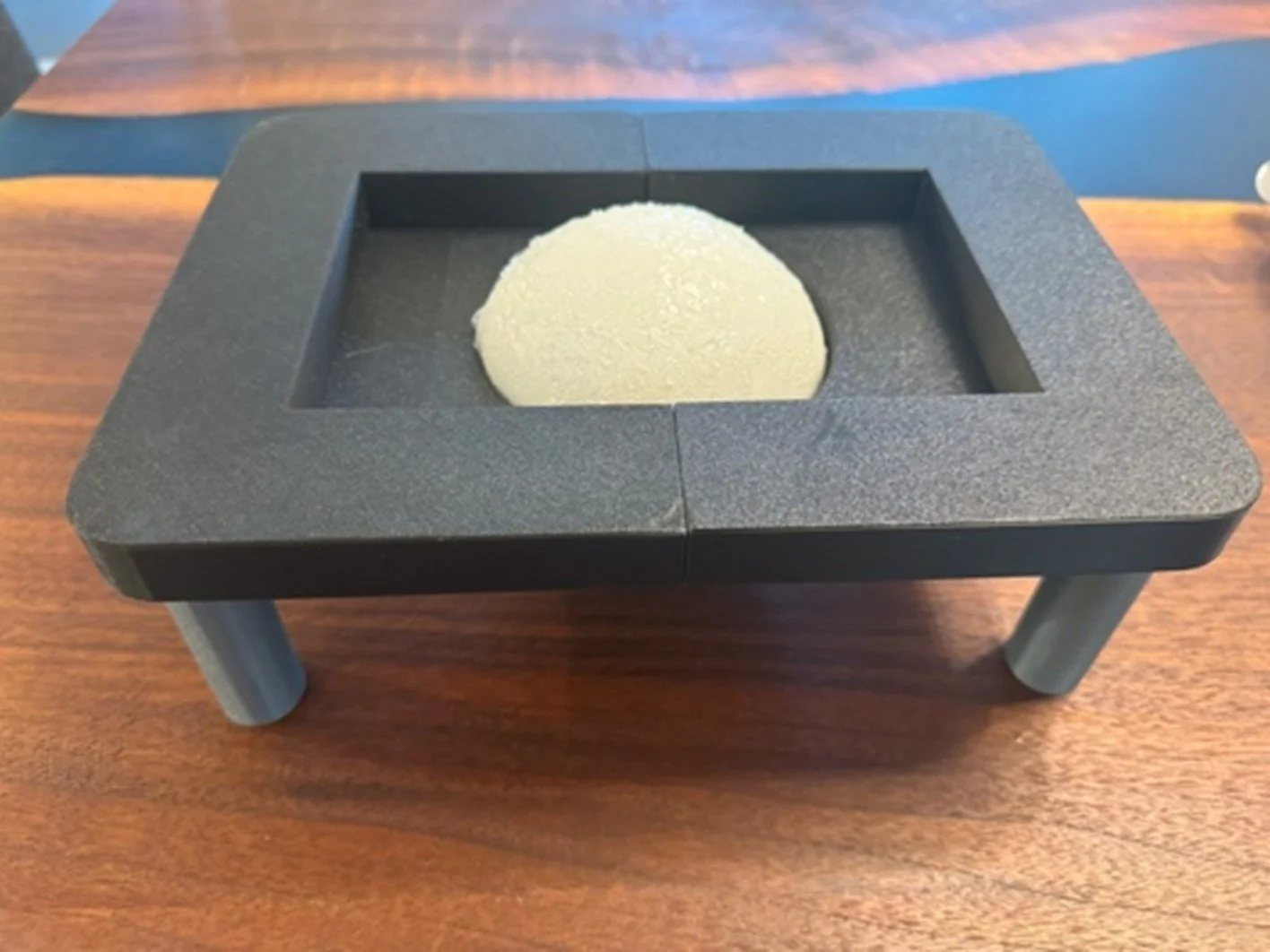
Place simulation balloon system into the Rubin Model base, and apply a generous amount of ultrasound gel.
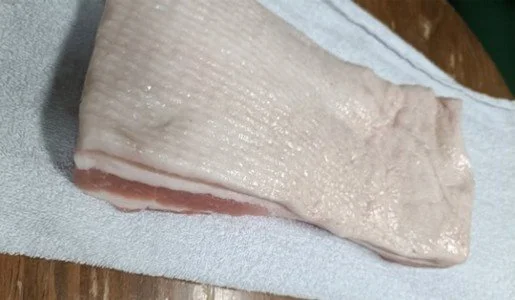
Place pork belly over balloon and apply generous amount of ultrasound gel. Skin-on pork belly should be trimmed to 1-1.5cm thickness, and 20cm x 15cm dimensions. Pork belly can be frozen and reused.
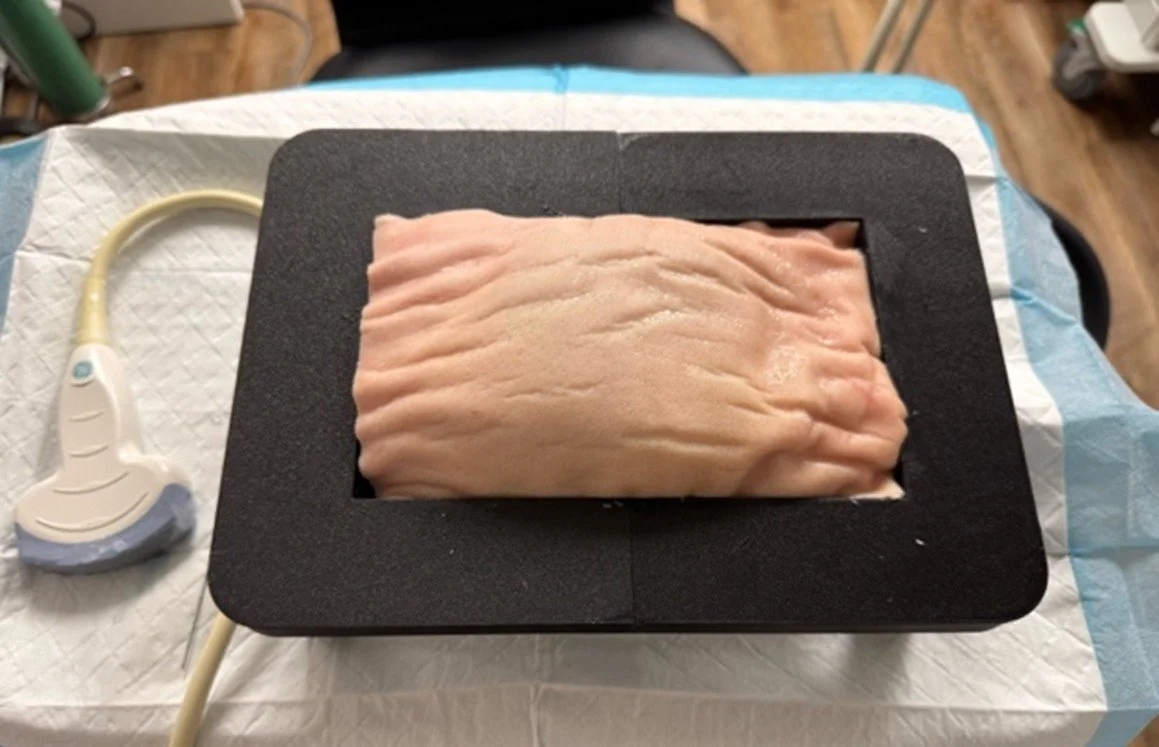
Tips and Tricks:
Tuck the pork belly edges into the Rubin Model tray for stability, so the pork belly is secure and does not move or slide off the balloon.
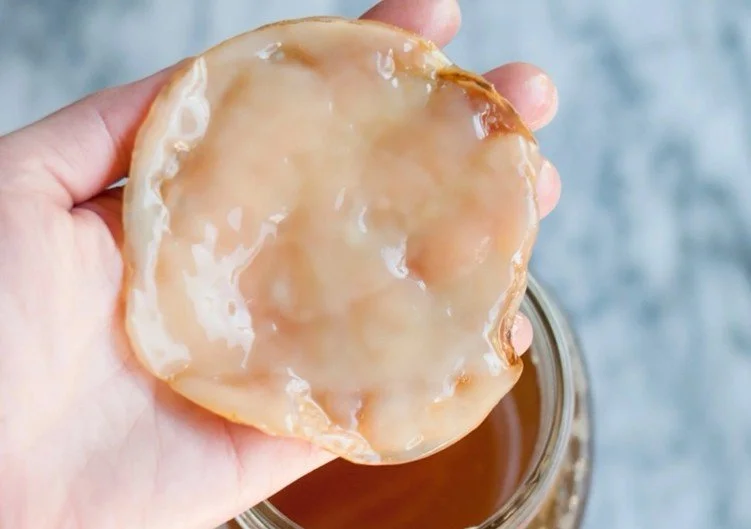
A Kosher/Vegan alternative is a Kombucha SCOBY, which can be cut to 20cm x 15cm dimensions. To grow your own SCOBY follow these instructions:
https://www.thekitchn.com/how-to-make-your-own-kombucha-scoby-cooking-lessons-from-the-kitchn-202596#post-recipe-10771
Contact Us
Questions about the Rubin Model simulation system before purchasing? Questions about how to build the simulation balloons? Would you like Dr. Rubin to come lead a workshop using the model? Please reach out with questions and feedback!